Last Updated: November 20, 2026
Quick Summary
To remove driveway stains, identify the stain first, then match it to the right method: absorb fresh oil with clay cat litter overnight, treat rust with white vinegar or oxalic acid, and scrub tire marks with dish soap and a stiff brush. Always test cleaners on a hidden patch, since harsh solvents can damage asphalt binder and acids can etch sealed concrete.
- Pile clay cat litter or oil-dry over fresh oil, grind it in, and leave it overnight.
- Make a paste of baking soda and dish soap for oil residue, then scrub and rinse.
- Let white vinegar or oxalic acid dwell 10 to 15 minutes on rust before scrubbing.
- Use a wide fan tip with a pressure washer and keep the wand moving in overlapping passes.
- Wear nitrile gloves and eye protection, and block runoff from reaching storm drains.
Table of Contents
- Read the Stain Before You Reach for a Cleaner
- How to Remove Oil Stains From a Concrete Driveway
- How to Clean a Driveway Without a Pressure Washer
- How to Clean a Driveway With a Pressure Washer
- How to Remove Oil Stains From an Asphalt Driveway
- Safety, Runoff, and Keeping the Mess Contained
- When DIY Driveway Stains Won’t Budge: Book a Professional Cleaning
- Frequently Asked Questions
Read the Stain Before You Reach for a Cleaner
Most driveway stains get worse because someone grabs a jug of cleaner before they know what they’re fighting. A rust bloom, a fresh oil drip, and a smear of tire rubber each need a different approach. This DIY guide to driveway stain removal starts with the same rule professional crews use: identify the stain, then pick the method.
Use this stain-by-stain decision guide to match the mark on your driveway to the right first move. It accounts for the surface you’re on, because the same stain on concrete, asphalt, or pavers can call for different tactics.
| Stain | Likely Source | First Move | Surface Caution |
|---|---|---|---|
| Fresh oil (dark, slick) | Car drip, grill | Absorb with clay cat litter or oil-dry; grind in and leave overnight | Safe on concrete, asphalt, pavers |
| Old oil (baked in) | Long-term drip | Repeat absorbent; then baking soda + dish soap paste; dwell and scrub | Asphalt: avoid harsh solvents; concrete: test peroxide on hidden patch |
| Rust (orange-brown) | Metal furniture, fertilizer | White vinegar or oxalic acid cleaner; dwell 10-15 minutes; scrub | Test on sealed concrete; avoid acid on asphalt |
| Tire marks (black scuffs) | Turning tires | Dish soap + stiff brush; for stubborn marks, a dedicated tire-mark remover | Asphalt: gentle scrubbing only |
| Grease (cooking) | Grill, smoker | Absorb first; then degreaser suited to surface | Pavers: avoid solvent that can stain joints |
| Mold/algae (green/black film) | Shade, humidity | Oxygen bleach or dedicated cleaner; scrub and rinse | All surfaces: prevent runoff to storm drains |
| Paint (drips) | Home projects | Identify paint type; use appropriate remover | Test on inconspicuous area first |
| Organic (leaves, berries) | Trees, shrubs | Scrub with detergent; rinse | Usually lifts with mild soap |
Fresh spills are far easier to lift than old ones. A stain that has baked in for months may never come out completely, and no cleaner on the shelf changes that. The U.S. Environmental Protection Agency’s guidance on household hazardous waste is worth a read before you rinse anything down the storm drain.
Watch out: on asphalt, solvent-based cleaners can dissolve the binder and leave a soft, crumbly patch. On sealed concrete, harsh acids can etch the sealer. Always test a small hidden area first.
How to Remove Oil Stains From a Concrete Driveway
Concrete is porous, so oil sinks in fast. The fix is to pull the oil out before you wash it, not to scrub it deeper.
Start with an absorbent material. Clay-based cat litter or an oil-dry absorbent works well. Pile it over the spill, grind it in with your shoe, and let it sit for a few hours or overnight. Sweep it up and repeat if the stain is still dark.
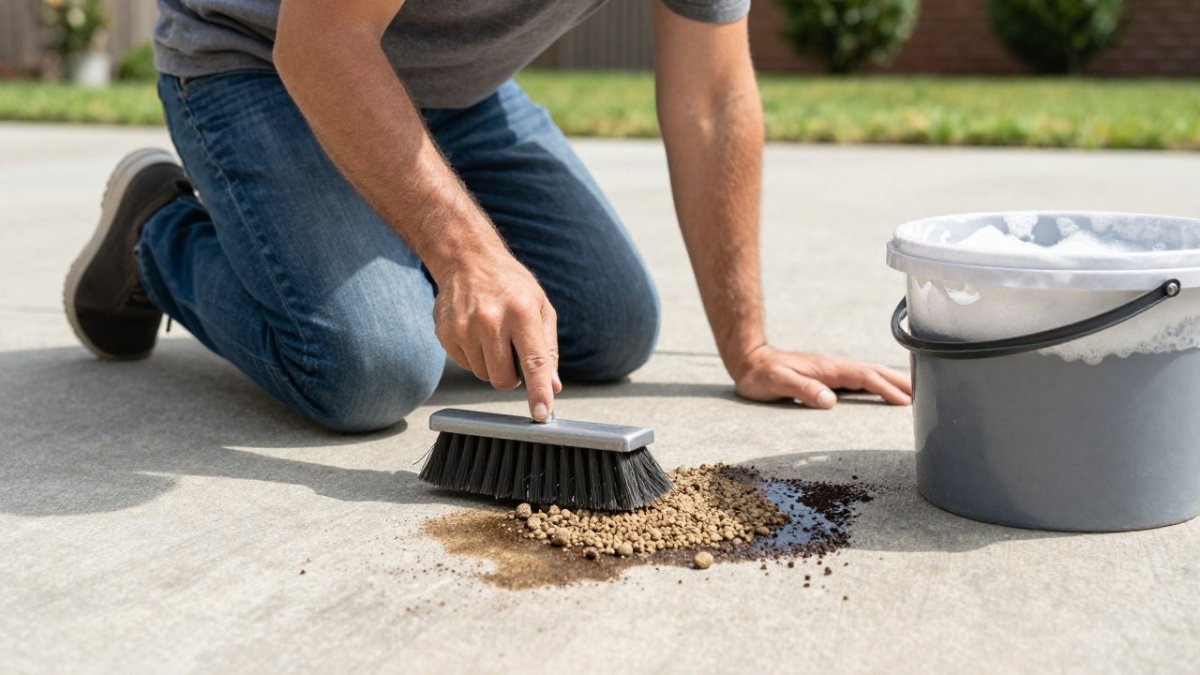
For what’s left, make a paste of baking soda and a little dish soap. Spread it on, let it dwell, then scrub with a stiff brush and rinse. For stubborn spots, a mix of white vinegar and water or a dedicated concrete degreaser helps. Hydrogen peroxide can lift lighter marks but test it on a hidden patch first.
How to Clean a Driveway Without a Pressure Washer
No pressure washer? You can still get a clean driveway with patience and the right tools. This method suits sealed concrete, pavers, and asphalt where a high-pressure blast can do damage.
Step 1: Sweep off loose debris. Clear leaves, sand, gravel, and dirt first. Cleaning over debris just grinds it in.
Step 2: Pre-treat stains. Apply your degreaser or detergent and give it dwell time.
Step 3: Scrub. Work a stiff scrub brush in small circles over each stain.
Step 4: Rinse. Wash the surface down and check your work.
For a full walkthrough, see our guide on how to clean a driveway without a pressure washer. If you’re gathering supplies first, this rundown of the best tools for manual driveway cleaning covers what to buy.
How to Clean a Driveway With a Pressure Washer
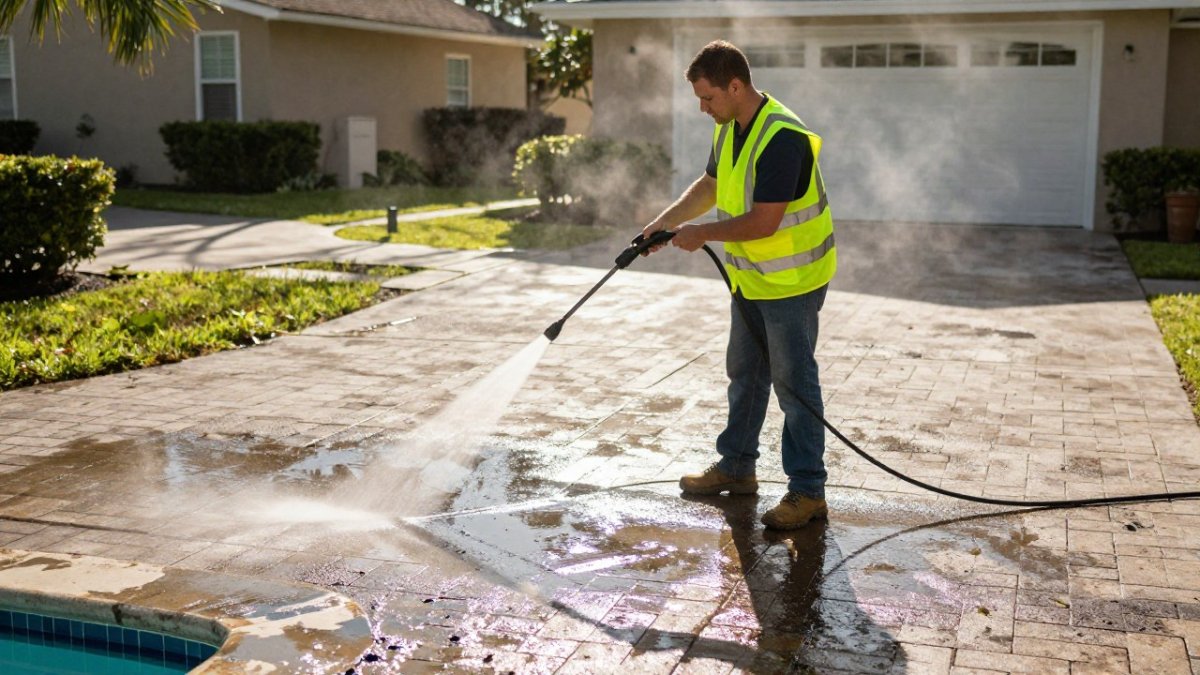
A pressure washer saves time, but technique matters more than power. Too much pressure etches concrete, strips sealer, and pits asphalt.
Follow this order:
- Sweep and pre-treat stains as above.
- Use a wide fan tip and keep the wand moving.
- Work in overlapping passes, not one spot.
- Hold the tip at a steady distance and never pause in one place.
- Rinse and let the surface dry before judging results.
Watch out: on asphalt, a narrow tip at close range can gouge the surface and loosen aggregate. Keep the pressure low and the tip moving.
Before you start, it’s worth knowing whether chemical cleaning is the better route for your stain. Our comparison of pressure washing vs chemical cleaning for driveways breaks down when each one wins.
How to Remove Oil Stains From an Asphalt Driveway
Asphalt is softer than concrete and reacts badly to harsh solvents. Skip the aggressive degreasers and heavy scrubbing.
Use an absorbent material first. Clay-based cat litter or oil-dry on a fresh spill, left overnight, pulls out most of the oil. For the residue, use a mild detergent with dish soap and a soft brush. Rinse gently.
Watch out: solvent-based cleaners and strong pressure can dissolve the asphalt binder and leave a soft, crumbly patch. Go gentle, and repeat over several days rather than attacking it once.
Old oil stains on asphalt often stay faintly visible even after good treatment. That’s normal. Sealing the surface afterward is the real fix.
Safety, Runoff, and Keeping the Mess Contained
Whatever you rinse off your driveway ends up somewhere. In many areas, that runoff can reach storm drains, canals, and waterways, so containment matters. This section covers protective gear, practical containment, responsible disposal, and what to do when a stain just won’t budge.
Protect yourself first. Wear nitrile gloves and eye protection when handling degreasers, acids, or bleach-based cleaners. Work in a ventilated area, and keep pets and children off the treated surface until it’s dry.
Contain the runoff. For small jobs, a towel or sandbag at the drain edge can block flow. For larger rinses, a temporary berm made from soil or sandbags works. Rinse with as little water as the job allows, and never dump leftover cleaner or oily water on the lawn or into a storm drain.
Dispose of oily residue properly. Soak up oil with absorbent material, bag it, and check with your local waste authority for household hazardous waste collection days. Many municipalities hold periodic drop-off events for oil-soaked absorbents and leftover chemicals.
Set realistic expectations for old stains. Deep-set oil, rust that has bonded to concrete, and years of mold in shaded joints may not disappear completely with DIY methods. A faint shadow can remain even after good treatment. Repeat the absorb-and-dwell process over several days rather than attacking it once. If the stain is still visible after three or four attempts, or if the surface is soft or crumbly, it may be time to consider resurfacing or professional help.
If you’d rather use products that are safer to rinse away, our list of eco-friendly driveway cleaning solutions covers lower-impact options. For professional driveway cleaning, paver sealing, soft wash roof cleanings, house wash and exterior home cleaning, and pool deck cleaning, a pro can assess whether the stain is removable or whether the surface needs restoration.
When DIY Driveway Stains Won’t Budge: Book a Professional Cleaning
Some stains win. Deep-set oil, rust that has bonded to concrete, and years of mold in shaded joints often need commercial equipment and the right chemistry. That’s when a professional cleaning makes sense.
Freedom Wash Club handles driveway cleaning, paver sealing, soft wash roof cleanings, house wash and exterior home cleaning, and pool deck cleaning across South Florida. We’re licensed and insured with over a decade of experience, and we schedule by phone or text with no in-person estimate needed. If your HOA has given you a deadline, a professional clean can help you meet exterior cleanliness standards, as we explain in our guide to avoiding HOA fines from dirty driveways.
Nicole B. from Boca Raton put it simply: “Our home was completely transformed.”
Stubborn stains and HOA deadlines don’t wait. Freedom Wash Club offers licensed and insured exterior cleaning with easy phone or text scheduling and a 100% satisfaction guarantee. Get started with Freedom Wash Club and restore your curb appeal without the scrubbing.
Frequently Asked Questions
How do you remove old oil stains from a concrete driveway?
Old oil stains sit deeper in the concrete pores, so start with an absorbent material like clay-based cat litter or an oil-dry product and grind it in with your shoe or a brick. Leave it overnight, sweep it up, then apply a degreaser and let it dwell before scrubbing. For set-in stains, a paste of baking soda and water or a hydrogen peroxide mix can lift more of the discoloration. Very old stains may leave a faint shadow even after treatment, which is where professional driveway cleaning helps.
Can dish soap or vinegar really remove driveway stains?
Dish soap cuts fresh grease and light oil well when mixed with warm water and scrubbed with a stiff brush. White vinegar works on rust marks and some mineral stains, but it is not strong enough for old oil or tire marks on its own. Think of both as gentle first attempts for fresh spills, not as a fix for stubborn stains that have soaked in. For those, a dedicated concrete cleaner or degreaser does more of the work.
How do you clean a driveway without a pressure washer?
Sweep off leaves, sand, and loose debris first, then pre-treat stains with an absorbent or degreaser and give it dwell time. Scrub with a stiff brush, rinse with a garden hose, and repeat on stubborn spots. A mix of dish soap and warm water handles general grime, while baking soda or hydrogen peroxide helps with oil and organic marks. It takes longer than a pressure washer but is safe for asphalt, pavers, and sealed concrete.
How do you remove oil stains from an asphalt driveway?
Asphalt is softer than concrete, so avoid aggressive scrubbing and high pressure that can loosen the surface. Blot fresh spills with an absorbent material, then apply a degreaser made for asphalt and let it dwell before rinsing gently. Clay-based cat litter works well for pulling oil out. Skip harsh solvents that can soften the binder, and consider paver sealing or a professional driveway cleaning if the stain has spread or the surface is already worn.